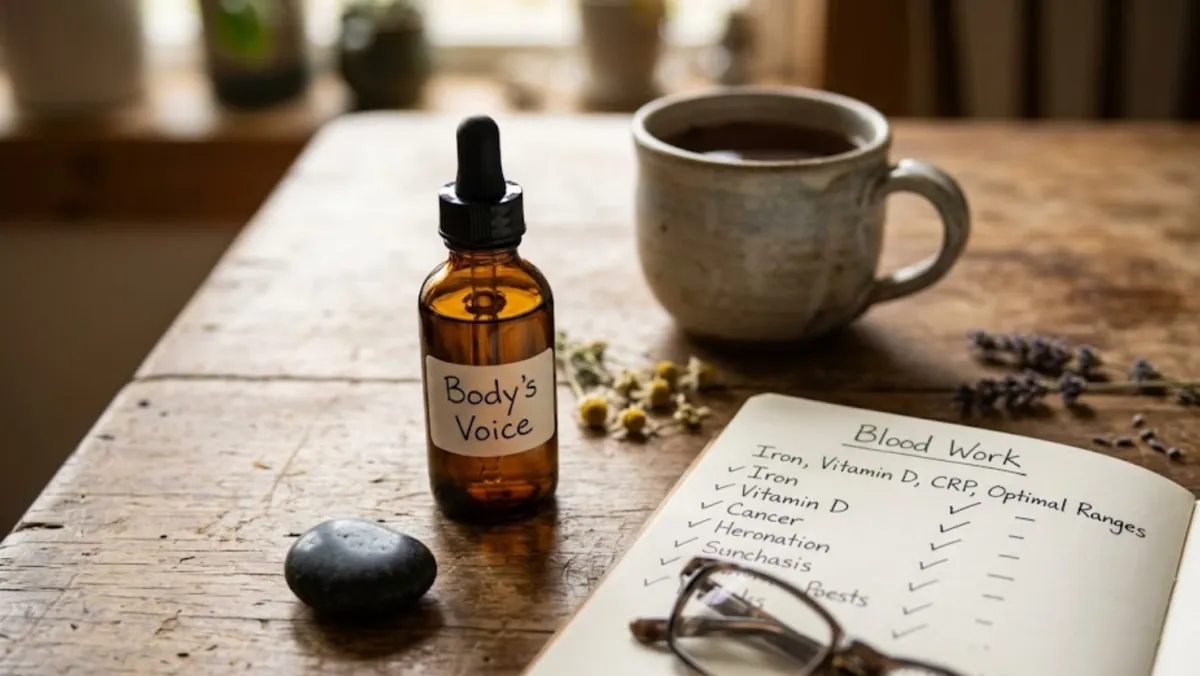
Why Blood Work Matters (and Why We Don’t Ignore the Body’s Voice First)
From the Kitchen Table

Why Blood Work Matters (and Why We Don’t Ignore the Body’s Voice First)
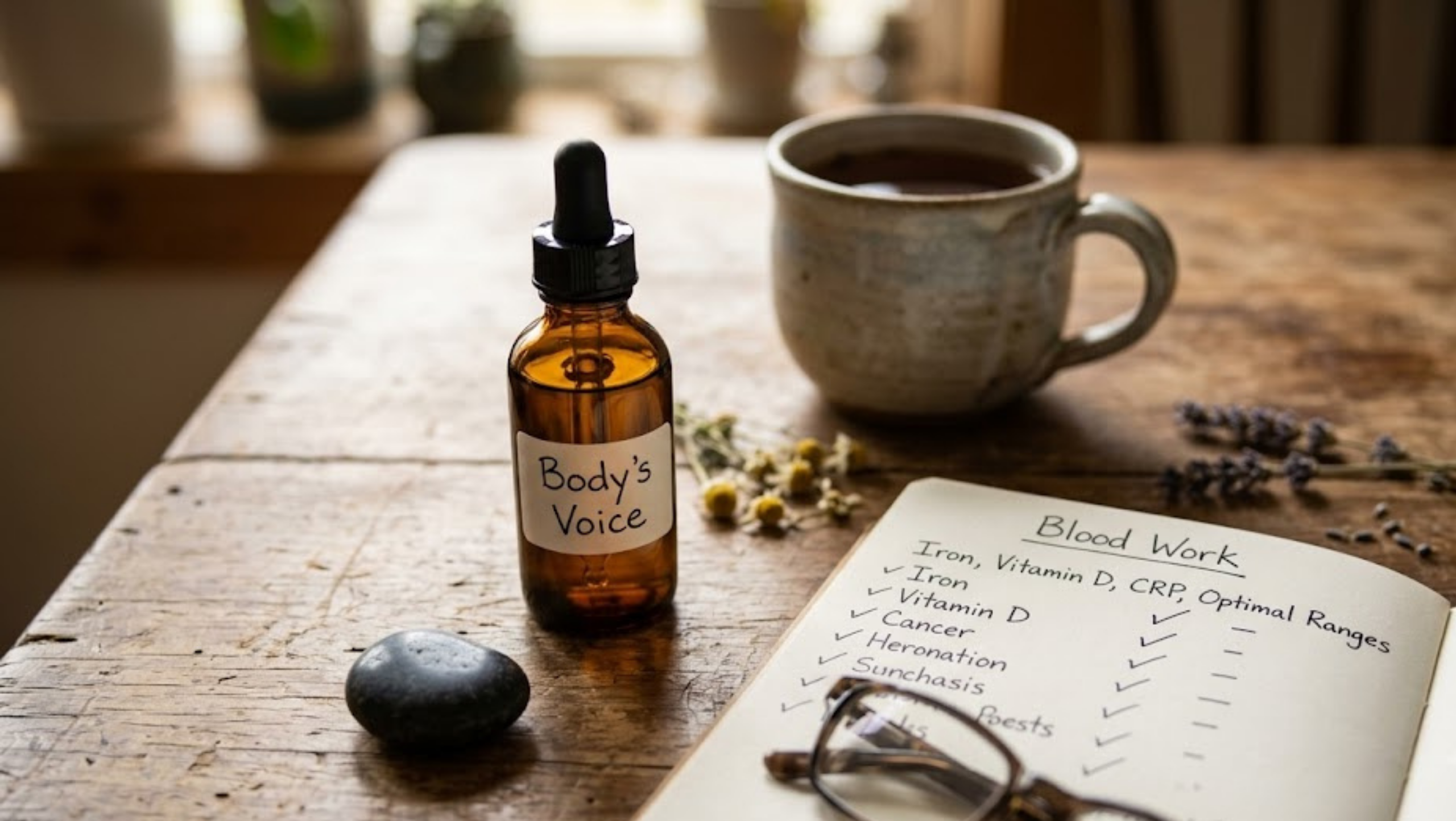
One thing I always come back to—both as a nurse and as an herbalist—is this:
The body speaks first.
Blood work simply helps us listen more clearly.
In a healthy approach to care, it’s never either/or. We don’t choose between intuition and data, or between symptoms and labs. We learn to use both with wisdom.
Your Body Is Always Giving Information
Long before anything shows up on a lab panel, the body is already communicating through symptoms like:
fatigue,
sleep changes,
digestive shifts,
mood changes,
skin changes,
headaches,
irregular cycles,
or changes in energy and resilience.
These signals matter. They are often the first indication that something is shifting.
As a nurse, I’ve learned not to dismiss symptoms too quickly. They are often the body’s earliest form of guidance.
But Symptoms Don’t Always Tell the Whole Story
Here’s where blood work becomes incredibly valuable.
Symptoms can point us in a direction—but they don’t always show:
nutrient deficiencies,
thyroid imbalance,
blood sugar dysregulation,
anemia,
inflammation markers,
liver or kidney stress,
or hormone shifts in their early stages.
Sometimes people feel “off” for a long time before anything becomes obvious externally.
Blood work helps fill in those gaps.
The Balance Between Listening and Measuring
I often think of it this way:
Symptoms tell us what the body feels like
Blood work helps us understand what the body is doing internally
We need both.
One without the other can leave us guessing.
Why Working With the Right Provider Matters
Not all labs are interpreted in the same way, and not all providers take the time to look at the whole picture.
Having someone who understands:
baseline ranges vs optimal ranges,
lifestyle context,
symptoms over time,
and how systems in the body interact
can make a significant difference in understanding what your body is truly asking for.
This is where collaboration matters.
Where Herbalism Fits In
Herbalism is not a replacement for medical care or diagnostics—it works alongside it.
Once we have a clearer picture from symptoms and lab work, herbs can often be used to gently support the body’s natural processes:
digestion,
stress response,
inflammation balance,
sleep,
and overall resilience.
But the direction matters. Good support starts with good understanding.
How I Help My Clients
In my consultations, I help people connect the dots between what they are feeling and what their body may be showing internally.
That often includes:
reviewing symptoms and health history,
discussing lifestyle and daily rhythms,
helping identify patterns worth exploring further,
and encouraging appropriate lab work with the right medical provider when needed.
I also help clients understand their results in a way that feels practical—not overwhelming—so they can make grounded, realistic changes in their daily life.
Whole-Body Care Is a Partnership
True wellness is not guessing.
And it’s not rushing to fix everything at once.
It’s a process of:
listening to the body,
confirming with data when needed,
working with skilled providers,
and supporting the body consistently over time.
That is where real clarity begins.
And honestly, when both the body’s voice and the lab results are honored together, we often find the path forward is much clearer than it first seemed.