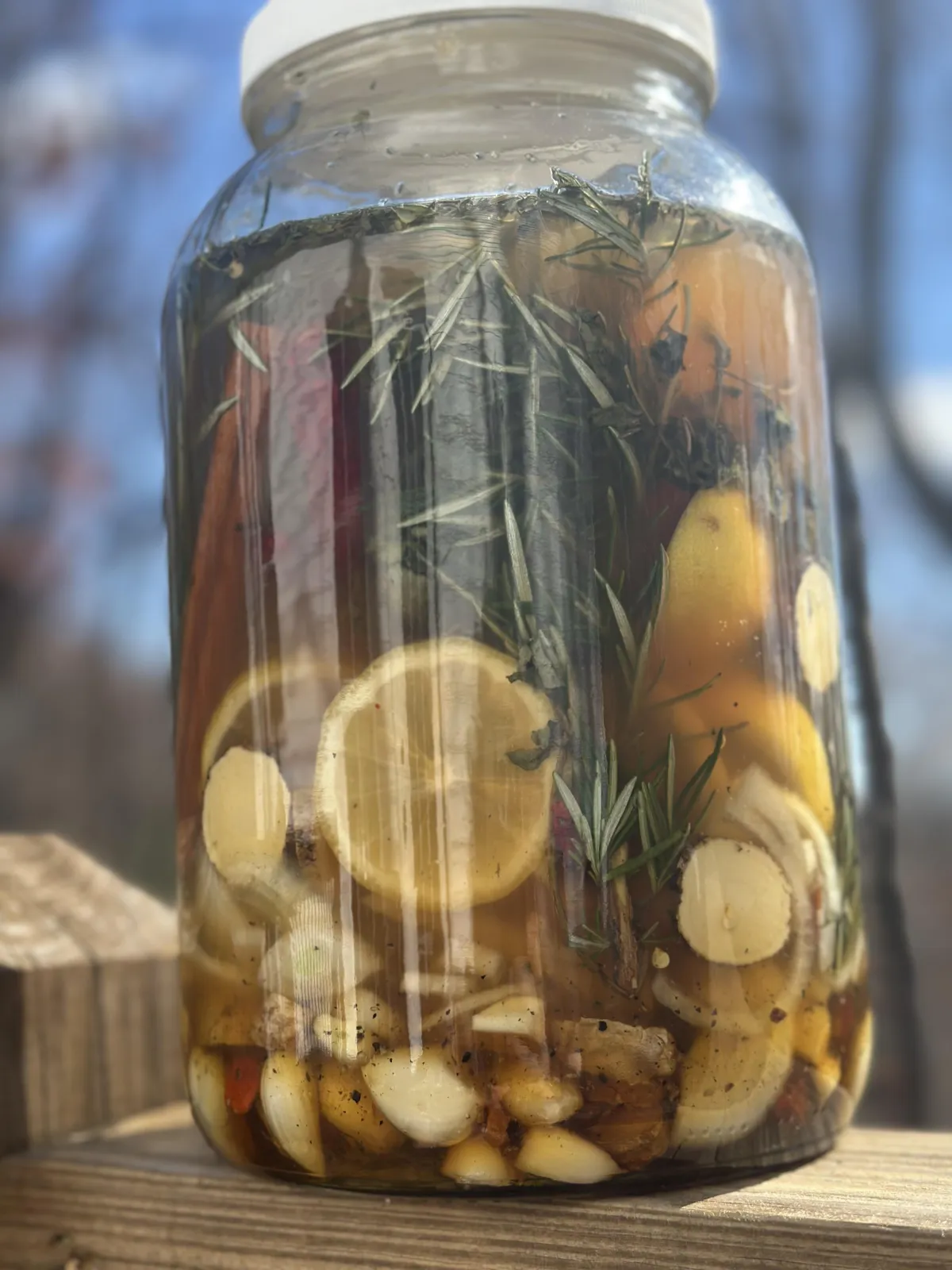
Fire Cider: A Little Fire for the Season
From the Kitchen Table

Fire Cider: A Little Fire for the Season
There is something about this time of year that makes me want to return to the kitchen. The seasons begin to change. The mornings get a little cooler. The garden starts slowing down. And I find myself thinking about the things I can prepare now that my family may appreciate later.
For me, that is one of the beautiful things about herbalism. It isn't always about waiting until we need something. Sometimes it is about preparing ahead.
This is the time of year I like to start my fire cider.
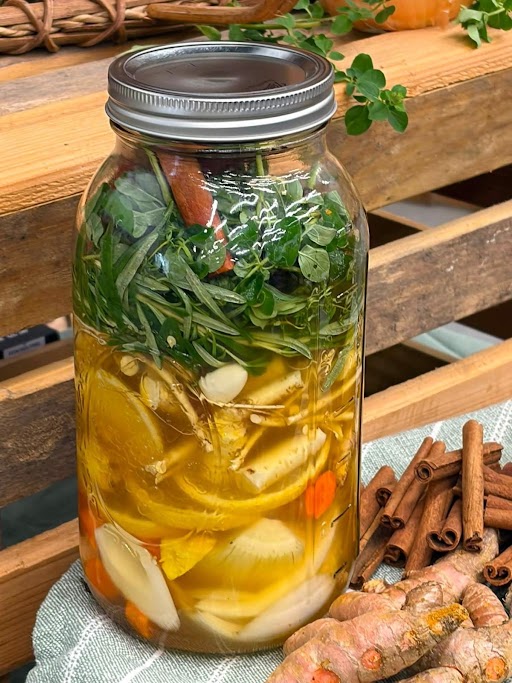
Fire cider is a traditional herbal vinegar tonic made with apple cider vinegar, warming herbs, roots, peppers, and other ingredients that have long been valued in herbal traditions. It is pungent, spicy, warming, and definitely lives up to its name.
The modern fire cider tradition is often associated with renowned herbalist Rosemary Gladstar, who helped popularize the preparation through her teaching and writing. But ask ten herbalists how they make fire cider, and you may get ten different recipes. And honestly? I think that's part of the beauty of it.
There Isn't Just One Right Recipe
Fire cider starts with a simple foundation:
Apple cider vinegar + herbs + roots + time.
From there, you can make it your own. You can make it fiery with cayenne or habanero peppers. You can add extra ginger because you love its warming bite. You can use herbs growing in your garden. You can add garlic, onion, horseradish, turmeric, lemon, or black peppercorns. And when the infusion is finished, you can add raw honey to soften the heat.
This is the kind of herbal preparation I love. It doesn't have to be complicated. It doesn't require a long list of unusual ingredients. It can begin with the things already familiar in your kitchen.
What's Inside My Fire Cider?
Raw Apple Cider Vinegar
This is the foundation of fire cider. I like to use a good-quality apple cider vinegar, traditionally made with the "mother." Vinegar has been used for generations as a medium for extracting and preserving herbs.
Garlic
Garlic brings a strong, savory flavor and has a long history of traditional use for seasonal and immune support. It is one of those kitchen staples that seems to belong in just about everything—and fire cider is no exception.
Onion
Onion adds depth and another layer of traditional herbal support. Paired with garlic, it creates a wonderful foundation for the stronger herbs and roots in the jar.
Ginger
Fresh ginger is one of my favorites.
It adds warmth, a little spice, and a beautiful brightness to the finished cider. Ginger has a long history of traditional use for digestive comfort and general warming support.
Horseradish
This is where the fire really starts to build.
Fresh horseradish gives fire cider its unmistakable pungency and that wonderful sinus-clearing sensation that makes you understand exactly why it earned its place in this preparation.
Hot Peppers
Cayenne, habanero, jalapeño—or whatever kind of pepper you have available.
This is where you get to decide how much fire you want.
Start small if you're not accustomed to spicy foods. You can always add more heat the next time you make a batch.
Turmeric
Fresh or dried turmeric adds beautiful golden color and a warming, earthy flavor. It has also been valued traditionally for its antioxidant and inflammation-supportive properties.
Oregano
Oregano is one of those herbs that feels perfectly at home in fire cider. It brings a strong, earthy flavor and has a long history of traditional use, particularly for seasonal and respiratory wellness. Fresh oregano is wonderful if you have it growing in your garden, but dried oregano works beautifully too. I especially love oregano alongside garlic, thyme, and rosemary. Together, they create an aromatic combination that smells like a kitchen preparing for winter.
Rosemary
Rosemary brings a beautiful herbal note to the cider. It has a long history of traditional use and adds both flavor and aroma to the finished preparation.
Thyme
Thyme is another favorite. It pairs beautifully with oregano and rosemary and has traditionally been used to support respiratory comfort, particularly during the colder months.
Black Peppercorns
A few whole peppercorns add another layer of warmth and flavor to the jar.
Lemon
Lemon brightens the entire preparation. Its tartness helps balance the earthy, pungent ingredients and gives the finished fire cider a fresh quality.
Raw Honey
Honey comes in at the end. Once the herbs have finished infusing and you've strained the cider, you can add raw honey to taste. It helps mellow the heat and turns a very intense vinegar into something much more enjoyable to take.
Making Your Fire Cider
You don't need fancy equipment. A clean quart-sized glass jar, a knife, a cutting board, and your ingredients are really all you need.Wash and chop your fresh ingredients and place them into the jar, filling it about two-thirds full.Pour the apple cider vinegar over everything until the ingredients are completely covered.
If you're using a jar with a metal lid, place a piece of parchment or wax paper underneath the lid so the vinegar isn't sitting directly against the metal.Then put your jar somewhere cool and dark.And now comes the part that can be difficult in our hurry-up world:
Wait.Let your fire cider infuse for approximately 2–4 weeks, giving the jar a gentle shake each day when you remember.You don't have to obsess over it.
Just check on it.
Give it a shake.
Let time do its work.
After the infusion period, strain out the herbs, roots, garlic, onions, and peppers. Add raw honey to taste.Some people like their fire cider sweet. Some like it hot enough to make their eyes water. You get to decide.
Transfer the finished cider to a clean glass bottle or jar and store it in a cool, dark place or in the refrigerator.
And Then You Can Get Creative
Once you understand the basic foundation, you can begin making fire cider that reflects your own kitchen and your own family.
You might add:
Echinacea
Astragalus root
Elderberries
Cinnamon sticks
Rose hips
Additional culinary herbs
You don't need to put everything into one jar. In fact, I encourage you to start simply. Learn what each ingredient tastes like. Learn what you enjoy. Pay attention to how different herbs change the flavor and character of the preparation. That is how herbal knowledge becomes something practical—not just something you read about, but something you learn by doing.
A Note From the Nurse in Me
Because I am both a nurse and an herbalist, I believe strongly in respecting both traditional herbal knowledge and modern healthcare. Fire cider can be a wonderful addition to a seasonal wellness routine, but it isn't a substitute for medical care, medications, or treatment when those things are needed. And herbs are not automatically safe simply because they are natural.
Some herbs can interact with medications or may not be appropriate for certain health conditions, pregnancy, or individual circumstances.
If you take medications or have a medical condition, it is worth talking with a qualified healthcare professional who understands your health history and the herbs you are considering before making concentrated herbal preparations part of your routine.
And if you're looking for someone you can sit down with and talk through your individual wellness goals, you can book a one-on-one wellness consultation with me through the Gray Mountain Wellness website.
Sometimes you don't need another article to read.
Sometimes you need someone to listen, ask questions, look at the bigger picture, and help you understand where to begin.
That's what our one-on-one consultations are for.
Why I Like Making It Ahead
Perhaps my favorite thing about fire cider isn't even what is inside the jar. It is the idea behind it. Prepare before you need it. There is something comforting about looking into the pantry and seeing a bottle of something you made weeks ago. It represents a little bit of planning. A little bit of traditional knowledge. A little bit of connection to the kitchen. And a reminder that caring for ourselves and our families doesn't always have to be complicated. Sometimes it starts with a glass jar on the counter. A few simple ingredients. And the willingness to let something take time.
Don't Have Time to Make Your Own?
I completely understand. Life is busy, and while I love making these preparations in my own kitchen, I know that not everyone has the time—or sometimes the desire—to chop, steep, strain, and wait. That's why I make small batches of fire cider in my apothecary, too.
If you'd rather let me do the chopping and steeping for you, you can find my Fire Cider in the Gray Mountain Wellness apothecary online, or stop by one of the local locations where I sell my products. It's the same kind of preparation I make in my own kitchen—made in small batches, with carefully chosen ingredients and plenty of time to infuse.
You bring the mug. I'll bring the fire.
From My Kitchen to Yours
If you've never made fire cider before, this is a wonderful time of year to start. Don't worry about making the "perfect" recipe. Make your fire cider. Make it as spicy as you like. Use the herbs you have. Add the oregano.Let the garlic and ginger do their work. Experiment with rosemary and thyme. Learn what each ingredient contributes.And let the process become part of your seasonal rhythm.
Because herbalism, to me, isn't about having a cabinet full of remedies. It is about learning to pay attention. To the seasons.
To our homes.
To our gardens.
To our bodies.
And to the simple things we can do, day by day, to care for ourselves and the people we love. So grab a jar, gather your ingredients, and bring a little fire into your kitchen.
I'll see you at the kitchen table.
Andrea
